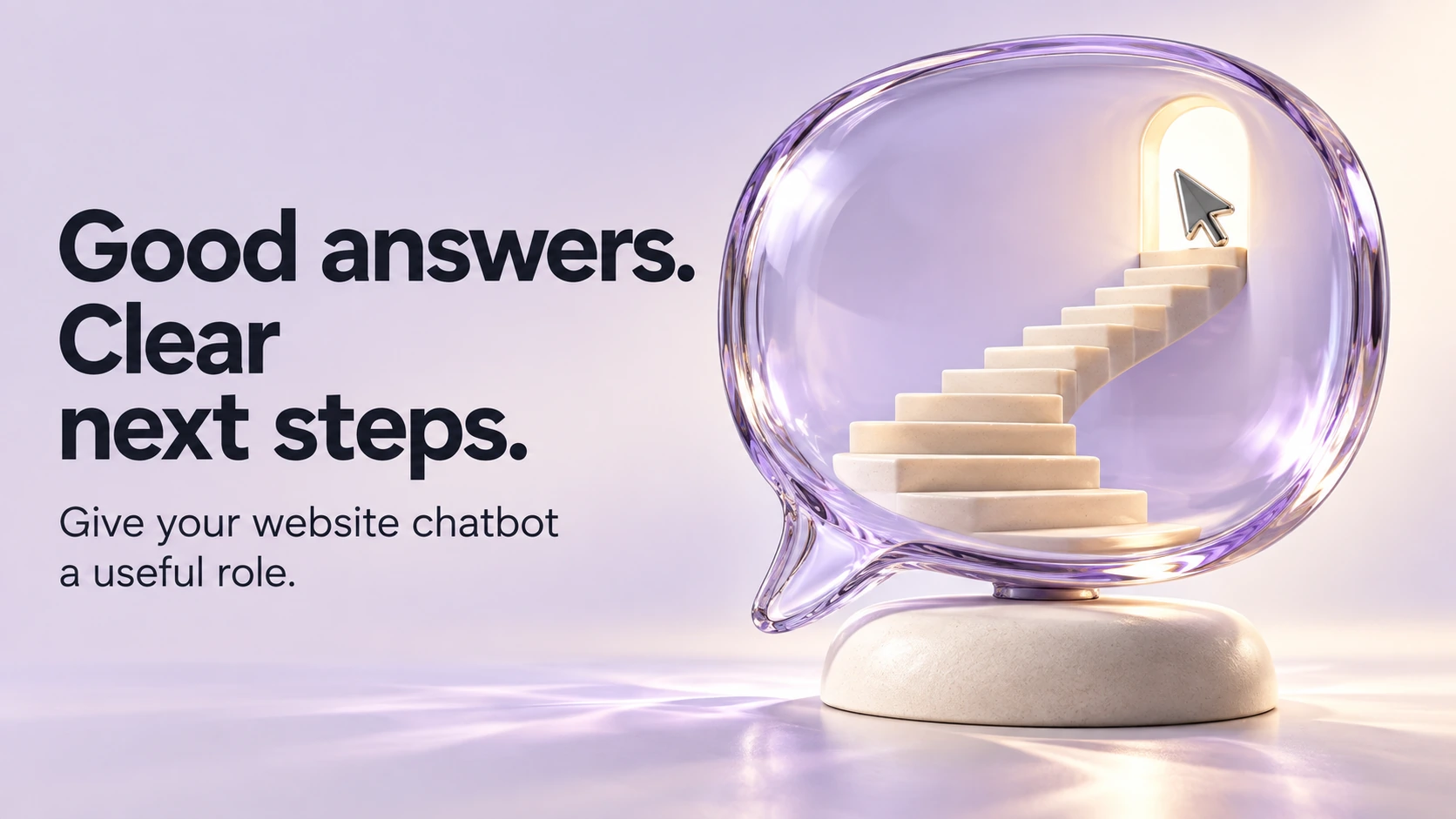
A visitor lands on a service page with a question that the page has not quite answered. A helpful conversation can clarify the next step. A generic greeting that covers the screen can create another obstacle.
Begin with the unanswered question.
Collect the questions your team receives most often and check which ones the website should answer directly. A chatbot should extend the page, not compensate for unclear navigation or missing service information.
- What does the service include?
- Is this the right service for my situation?
- What do I need before I enquire?
- How do I reach the team or request an appointment?
Give the assistant a clear scope.
Use approved information and tell the visitor when the answer is uncertain. The assistant should not invent prices, availability, or policies. For requests that need judgment, offer a handoff to the team.
Design the transition.
A conversation that ends in “someone will contact you” needs an actual destination. Decide who receives it, where the team sees it, and how the visitor knows the request was received. Keep the distinction between a request and a confirmed appointment visible.
| Visitor need | A useful next step |
|---|---|
| A factual question | A concise answer from approved information. |
| A choice between services | A short explanation and relevant service links. |
| An unusual request | A human handoff with the conversation context. |
| A booking | A connected flow that confirms its actual result. |
Measure usefulness before conversion claims.
Look at answer quality, abandoned conversations, successful handoffs, and relevant enquiries. Compare a consistent period and account for changes in traffic. Adding a chatbot does not guarantee an increase in conversions.
Explore AI automation or see how the same principles apply to an AI receptionist.
A perspective from the ZXP team.
Designed to help you ask better questions and take a clearer next step.